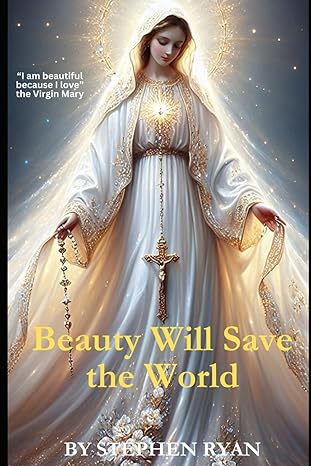
Signs from Above Have Come Down to Earth

Pictured over Grandfather Mountain, North Carolina this morning. There will be signs.
Saint John Paul the Great: Mary’s Spark of Grace Igniting the Path to Christ
Saint John Paul II, often called “the Great,” was a pontiff whose life and papacy were profoundly marked by a deep devotion to the Virgin Mary. His papal motto, “Totus Tuus” (“Totally Yours”), drawn from the writings of St. Louis de Montfort, encapsulated his complete entrustment to her as a means to draw closer to Jesus Christ. Throughout his teachings, homilies, and encyclicals, John Paul II emphasized Mary’s unique role as the Mother of Christ who channels divine grace, awakening souls to faith, conversion, and a profound union with her Son. He portrayed her intercession as a transformative force—a “spark” of grace that enkindles the human heart, much like a flame igniting dry tinder, leading the wandering and the faithful alike toward spiritual renewal.
This imagery of ignition and flame recurs in John Paul II’s writings, symbolizing how Mary’s maternal presence sparks the supernatural life in believers. In his encyclical *Redemptoris Mater* (1987), dedicated to Mary’s role in the mystery of Christ and the Church, he describes her exultation in the Magnificat as a revelation that “springs forth like a clear and life-giving flame of the spirit.” Here, Mary’s obedience of faith at the Annunciation bursts into a luminous force, illuminating God’s mercy and countering the darkness of disbelief. “In her exultation Mary confesses that she finds herself in the very heart of this fullness of Christ,” he writes, portraying her as the vessel through which grace flows, uprooting sin and fostering a pilgrimage of faith that mirrors her own journey from Nazareth to Calvary.
John Paul II taught that Mary’s “burning charity”—another fire metaphor—compels her to cooperate in Christ’s redemptive work, restoring “supernatural life to souls.” This maternal mediation, he explained, is not a rival to Christ’s unique role but a subordinate participation that draws humanity back to God. “Through this ‘burning charity,’ which sought to achieve, in union with Christ, the restoration of ‘supernatural life to souls,’ Mary entered, in a way all her own, into the one mediation ‘between God and men’ which is the mediation of the man Christ Jesus,” he noted in *Redemptoris Mater*. For the Pope, this spark of grace ignites conversion by untying the “knot of Eve’s disobedience” through Mary’s faithful “yes,” loosening the bonds of unbelief and opening hearts to the Gospel.
In his apostolic letter *Rosarium Virginis Mariae* (2002), John Paul II further elaborated on the Rosary as Mary’s “school” for igniting faith. He urged believers to contemplate Christ’s mysteries through her eyes, describing her gaze at Pentecost as “afire” with the Holy Spirit, sparking the Church’s evangelization. The addition of the Mysteries of Light to the Rosary, he said, was intended to “enkindle renewed interest in the Rosary’s place within Christian spirituality.” At the Wedding at Cana, Mary’s words—”Do whatever he tells you”—open “the hearts of the disciples to faith,” serving as a Marian foundation for conversion. “Contemplating the scenes of the Rosary in union with Mary is a means of learning from her to ‘read’ Christ, to discover his secrets and to understand his message,” he wrote, emphasizing how her intercession obtains “in abundance the gifts of the Holy Spirit,” transforming souls until Christ is fully formed in them.
John Paul II’s personal experiences reinforced this teaching. On May 13, 1981—the anniversary of the first Fatima apparition—an assassin’s bullet nearly claimed his life in St. Peter’s Square. He credited Our Lady of Fatima with deflecting the shot, later placing the bullet in her crown at the Portuguese shrine. This event deepened his conviction that Mary acts as a protective mother, igniting grace amid crisis. In a 2000 reflection on the Message of Fatima, he connected her apparitions to calls for conversion, noting how her Immaculate Heart triumphs over evil, leading souls to repentance and peace. “Mary’s mediation is intimately linked with her motherhood,” he affirmed, guiding the faithful to “adhere more closely to the Mediator and Redeemer.”
The Pope’s devotion, inspired by St. Louis de Montfort’s *True Devotion to Mary*, underscored that true Marian piety is Christocentric. “Thanks to Saint Louis de Montfort, I came to understand that true devotion to the Mother of God is actually Christocentric,” he shared in *Crossing the Threshold of Hope* (1994). Mary does not obscure Christ but illuminates him, her spark of grace kindling a fire that burns away doubt and draws the soul into deeper faith. He lamented the modern “loss of the sense of the supernatural,” urging a return to Mary to rediscover God’s active presence in the world.
For Saint John Paul II, Mary’s spark of grace is no abstract concept but a lived reality that propels conversion. Whether through the Rosary, apparitions like Fatima, or daily entrustment, she gently ignites the human soul, leading it from the shadows of sin to the radiant light of Christ. As he proclaimed, “Mary goes before us and accompanies us,” her maternal love ensuring that the flame of faith never extinguishes. In an era of uncertainty, his words invite believers to let Mary enkindle their hearts, embarking on a path of profound transformation toward Jesus.